Rose Tattoo Meaning
The rose is arguably the most tattooed flower in the world, and for good reason. It carries a rich, layered symbolism that spans cultures and centuries, making it relevant to an extraordinarily wide range of personal stories and intentions. At its most fundamental, the rose tattoo symbolizes love, passion, beauty, and the dual nature of pleasure and pain.
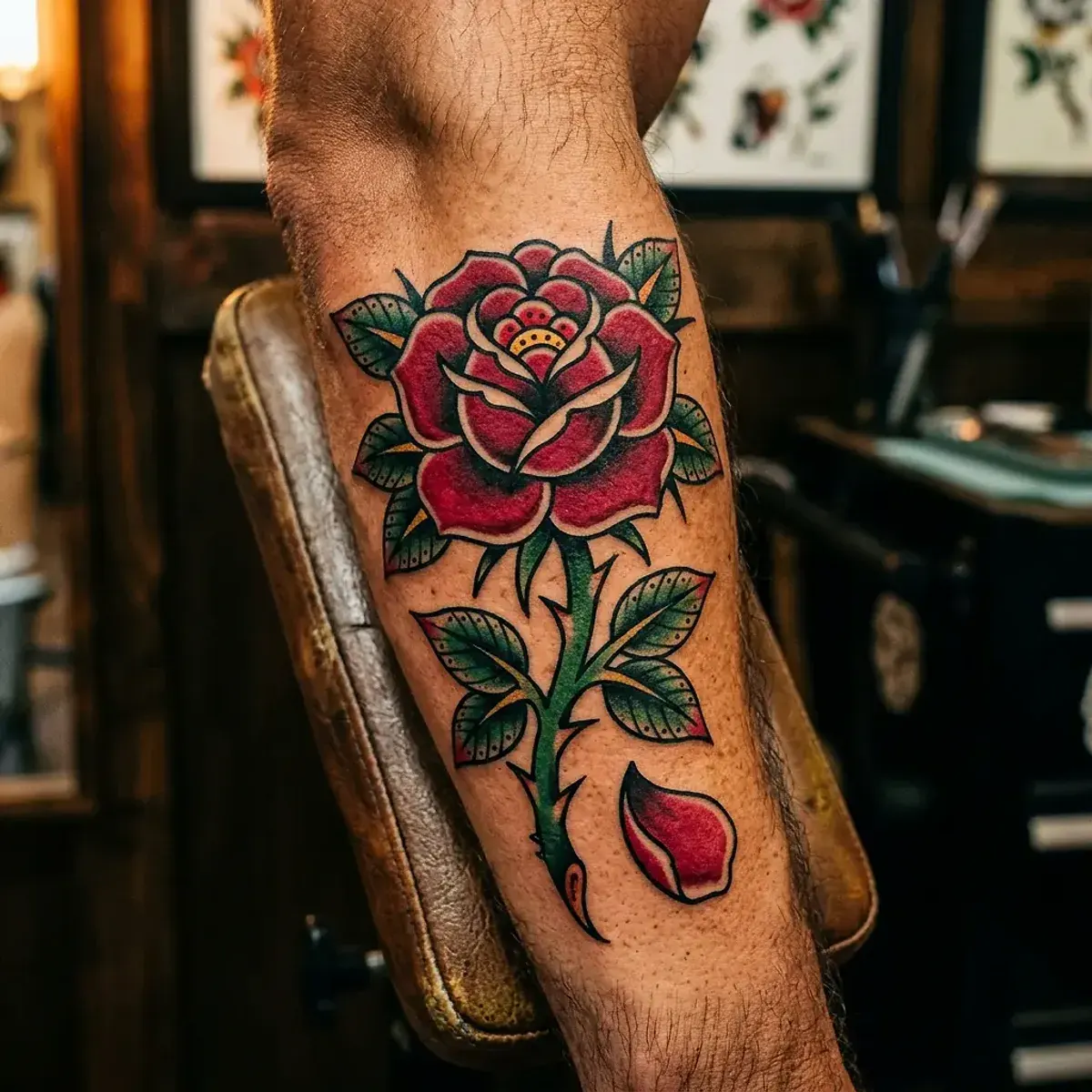
The rose is a flower that does not give itself easily. Its beauty is guarded by thorns — a visual metaphor that artists and philosophers have explored for millennia. A rose tattoo with thorns intact speaks to the understanding that beauty and pain are inseparable, that love always carries risk, and that the most precious things in life demand something from us.
A thornless rose, by contrast, represents pure love or beauty uncomplicated by danger — sometimes chosen to commemorate a relationship or person that brought only joy.
Color transforms the meaning dramatically. The classic red rose is the language of romantic love and desire. A black rose signifies mourning, loss, the end of something, or — in some contexts — rebellion and dark beauty. Pink roses evoke grace and admiration. White roses speak of purity, innocence, and new beginnings.
Origins and History of the Rose Symbol
The rose has been humanity’s most beloved flower for at least 5,000 years. Ancient Sumerians mentioned the rose in writing around 2600 BCE. In ancient Rome, roses were so prized that the wealthy heated their bath water with rose petals and scattered them on banquet floors — the phrase sub rosa (“under the rose”) came to mean confidentiality, as Romans hung roses over meeting tables to signal that what was said stayed secret.
In Greek mythology, the rose is intimately connected to Aphrodite, the goddess of love. According to one legend, the first roses grew red from the blood of Aphrodite as she rushed to aid her wounded lover Adonis. This origin story cemented the rose as love’s definitive symbol in the Western tradition.
In early Christian symbolism, the rose was associated with the Virgin Mary and became known as the “mystical rose.” Rose windows in Gothic cathedrals represented divine beauty and perfection.
The rose entered Western tattooing most powerfully through the American traditional style of the early 20th century, where sailor tattooists like Norman Collins (Sailor Jerry) elevated the rose to iconic status alongside anchors, swallows, and daggers.
The Rose in Different Cultures
In Persian poetry, the rose and the nightingale (gul o bulbul) form one of literature’s great romantic pairings. The nightingale sings in agony for the rose it can never possess, symbolizing the longing of the human soul for divine beauty.
In Islamic tradition, the rose represents the Prophet Muhammad and is considered a sacred flower. Rose water is used in religious ceremonies and the rose garden (gulshan) is a metaphor for paradise.
In Western esoteric traditions including Rosicrucianism and Freemasonry, the rose is a symbol of secrecy, initiation, and spiritual regeneration. The Rosy Cross — a cross at whose center blooms a rose — represents the union of opposites: earthly and divine, suffering and joy.
In Mexican Day of the Dead iconography, roses (particularly orange and yellow cempasuchil marigolds, but roses as well) adorn altars as offerings to the departed.
Rose Tattoo Styles
American Traditional rose tattoos feature bold black outlines, limited shading, and saturated red and green tones. This style remains one of the most timeless tattoo aesthetics and holds up exceptionally well over decades.
Neo-traditional roses build on the traditional foundation with more color complexity, fine-line detailing in the petals, and often larger, more dramatic compositions.
Realism rose tattoos are among the most technically demanding, capturing every petal’s texture, shadow, and light in photographic detail. A skilled realism artist can make a rose tattoo look almost three-dimensional.
Blackwork roses use bold black ink with no color, creating high-contrast designs that range from simple outline work to deeply shadowed, almost graphic interpretations.
Geometric and dotwork roses deconstruct the flower into mathematical forms and stippled patterns, appealing to those who want a contemporary, architectural aesthetic.
Popular Placements
The forearm is the classic placement for a standalone rose tattoo — highly visible, easily shown or hidden, and offering enough canvas for a well-detailed medium-sized design.
The upper arm and shoulder suit larger rose compositions, particularly when the rose is combined with additional elements like stems, leaves, or other flowers.
The hand — especially the back of the hand or between thumb and forefinger — has become a popular location for bold traditional roses, though this placement fades faster due to skin exposure.
The thigh offers a large, relatively private canvas for elaborate designs. A large realistic rose or a neo-traditional composition in full bloom works beautifully here.
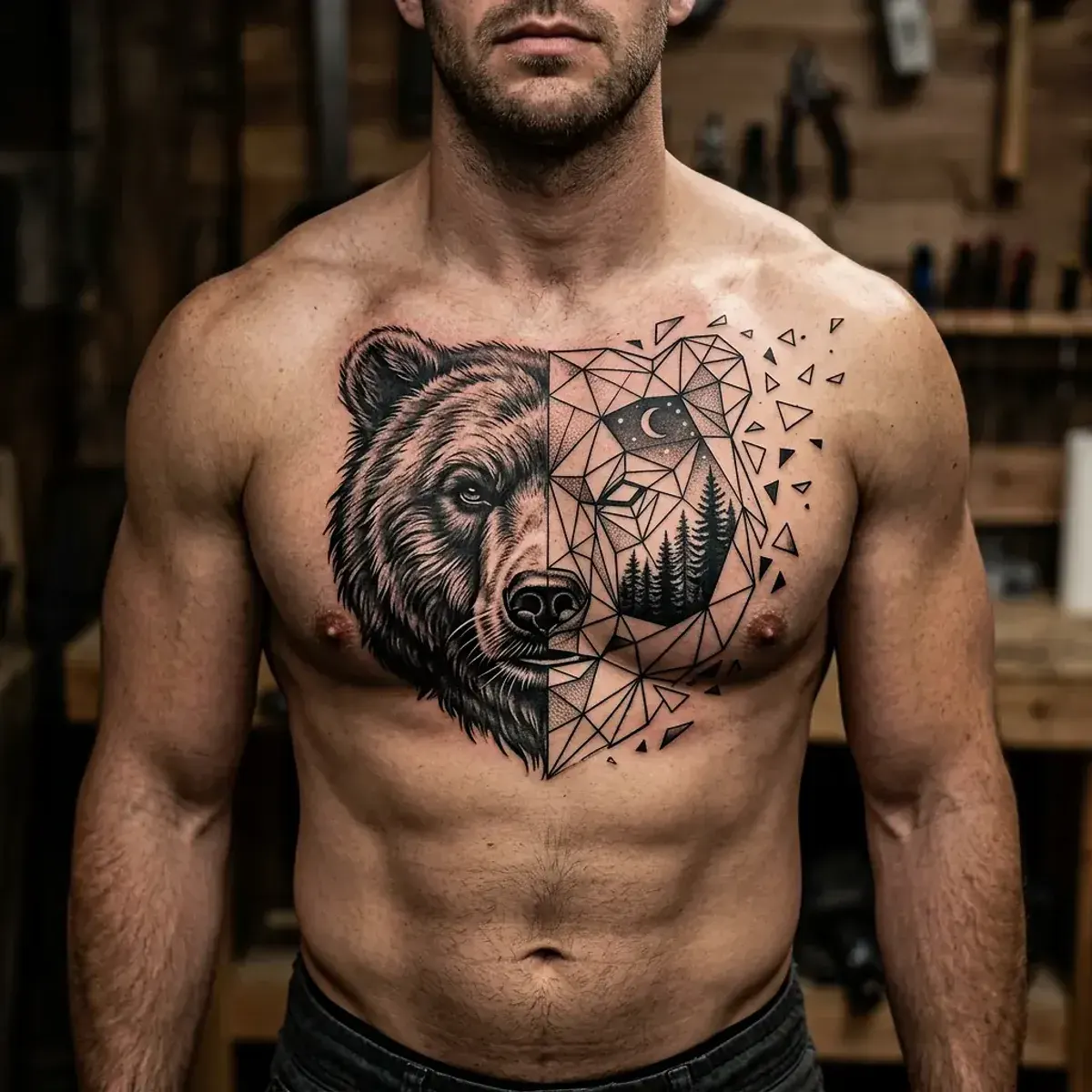
The chest and sternum suit symmetrical rose designs, often mirroring each other across the breastbone for a powerful visual statement.
Combinations and Associations
The rose’s most famous partner is the dagger — an American traditional classic where a dagger pierces a rose, symbolizing betrayal, heartbreak, or the coexistence of beauty and violence.
A rose paired with a skull is another time-honored combination, speaking to mortality and the fleeting nature of beauty. This pairing can be rendered in traditional style or as a calavera in Day of the Dead aesthetics.
The butterfly emerging from or resting on a rose creates a romantic, nature-forward composition that doubles the transformation symbolism.
A snake coiled around a rose stem introduces themes of danger, temptation, and the seductive nature of beauty — a richly layered and visually striking combination.
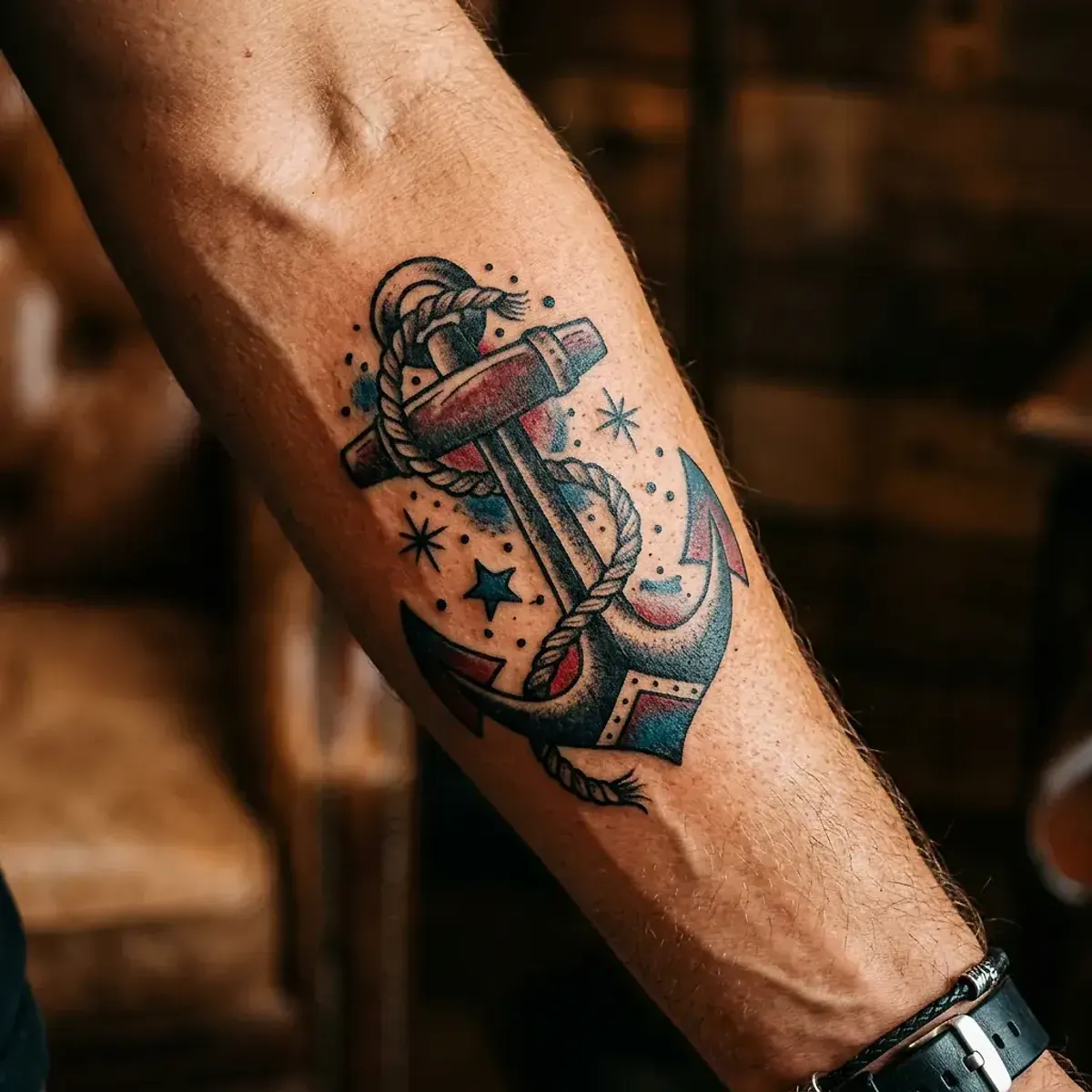
For those drawn to the sea, a rose paired with an anchor speaks to steadfast love and the hope that keeps sailors anchored to home.