Dreaming of a grave rarely speaks of death in the literal sense. In most readings, the grave points to an ending (a chapter of life, a relationship, a habit), to a memory kept buried, or to grief that is still unfolding. The emotion you felt points toward one or the other.
Dreaming of a Grave: General Meaning
The main meaning comes down to one idea: the grave marks the place where we lay what is finished. Dreaming of a grave can therefore reflect the need to close a stage, accept a loss, or make peace with a part of your past. As a place of memory, it is also a symbol of continuity as much as of separation.
Three elements guide the reading. First, the look of the grave: tended, flowered, cracked or forgotten, it shows the state in which you are leaving that past. Next, the action: looking, digging, laying flowers or fleeing. Finally, the emotion: dreaming of a cemetery in calm often evokes peace, while anxiety signals instead a question that is still open.

Common Variations of the Grave Dream
An Open Grave
An open grave often points to a subject you thought was settled that is resurfacing: a conflict, a regret, an old emotion. An empty tomb suggests a passage or a renewal rather than a loss.
A Flowered Grave
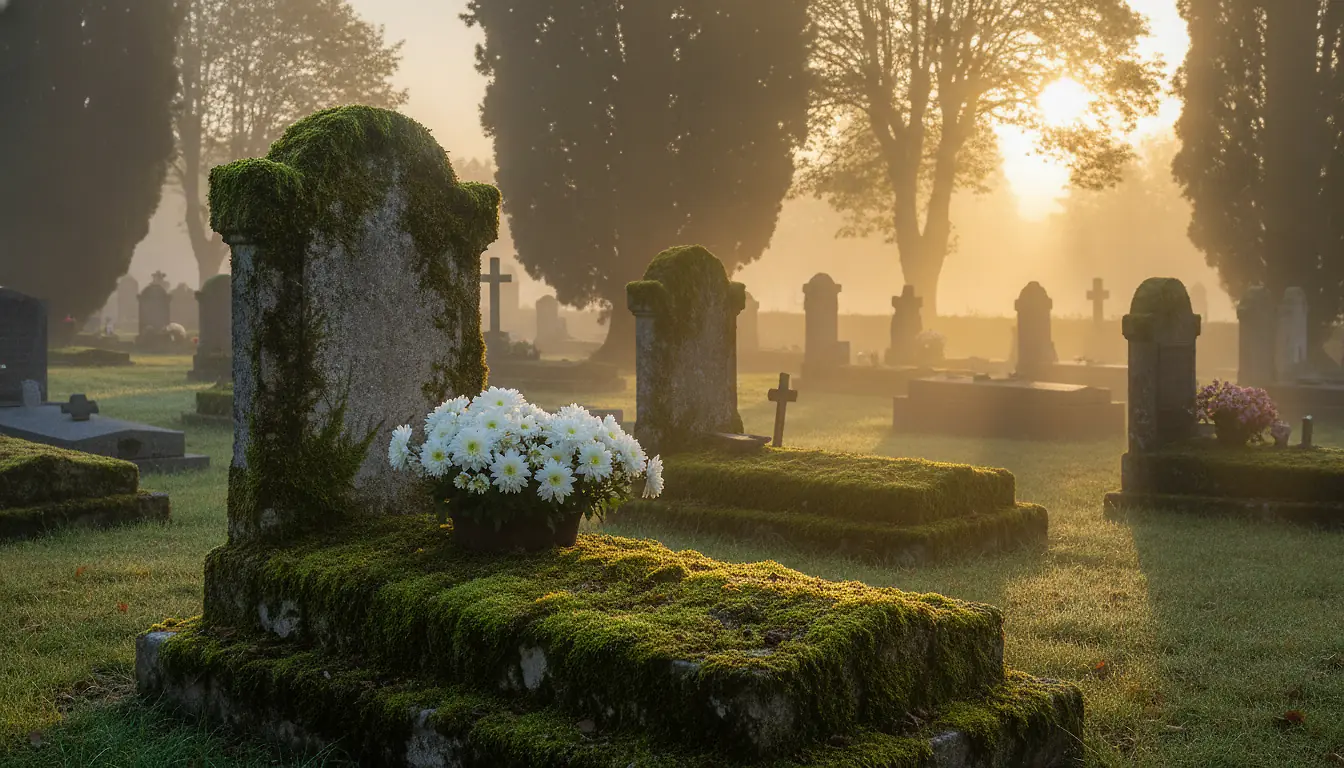
Flowers on a grave express the care given to memory. This dream often accompanies grief that is easing or gratitude toward a period of your life. If you lay the flowers yourself, the gesture underlines your active role in this reconciliation.
An Abandoned Grave
Tall grass, a moss-covered stone, an erased name: the neglected grave can reflect a part of you that has been set aside, such as a talent, a friendship or a project. It also raises the question of guilt toward a forgotten loved one.
Seeing Your Own Grave
Reading your name on a tombstone often evokes the end of an identity: a career change, a breakup, children leaving home, retirement. The tone of the dream matters: serenity suggests an accepted transformation, fear a transition forced on you.
Digging a Grave
Digging a grave yourself points to a decision: burying a relationship, a resentment or an old way of doing things. Note whether the task feels painful or liberating.
Paying Respects at a Loved One's Grave
When the grave belongs to someone who has died, the dream often continues the work of grief, with what was left unsaid. The words exchanged matter more than the setting.
Getting Lost in a Cemetery
Searching for a grave without finding it can reflect hesitation about what you want to keep of your history. This dream is related to scenes of being lost and of labyrinths.
Falling Into a Pit
Slipping into an open grave evokes the fear of being dragged down by the past or by sadness. Climbing out alone or thanks to an outstretched hand shows the resources you count on.
What Psychology Says About the Grave Dream
In The Interpretation of Dreams, published in 1900, Freud sees the dream as the disguised fulfillment of a wish. He devotes a passage to dreams of the death of loved ones, which he links to ambivalent feelings toward those close to us. In this Freudian reading, a dreamed grave can signal a repressed thought that the dreamer doesn't dare to voice while awake.
Jung instead reads the grave as an image of transformation. For him, symbols of death and descent underground belong to the archetypes of the collective unconscious and accompany a psychic rebirth: one part of the self ends so that another can develop. This reading also applies to your dreams of death and the end of a cycle, which Jung rarely interpreted as omens.
Current research emphasizes the continuity between waking life and sleep: the concerns and emotions of the day feed the content of our nights. A recent funeral or a visit to the cemetery is enough to bring a grave into a dream. Dreams about the deceased remain common: 46% of American adults say they have been visited in a dream by a deceased family member, according to a Pew Research Center survey published in 2023. These nighttime visits often resemble dreams of a ghost or an invisible presence.
The Grave in Traditions and Cultures
In ancient Egypt, the tomb was thought of as a "house of eternity," where the deceased continued their existence thanks to offerings. In the 2nd century, Artemidorus of Daldis, author of the Oneirocritica, already set out a principle that is still repeated: the same dream is not read the same way depending on the dreamer's age, profession and situation. In the Gospels, the empty tomb of Easter makes the grave a symbol of resurrection.
In France, putting flowers on graves at All Saints' Day remains a lively custom, and the chrysanthemum became established there after the First World War. In China, the Qingming festival brings families together to clean the graves of their ancestors, and in Japan visiting family graves goes along with the Obon period. In these cultures, the grave connects the living to their lineage.
How to Use This Dream in Daily Life
When you wake up, write down three things before they fade: the state of the grave, the name or person associated with it, and the dominant emotion. Add the events of the previous day: the link to a conversation or the anniversary of a death often appears on rereading.
- What situation in your life is coming to an end, or should be?
- Are you carrying a grief, a breakup or a regret that you haven't yet expressed?
- What are you leaving neglected, like this abandoned grave?
- Did this dream leave you with a feeling of peace or of worry?
A simple gesture gives shape to this dream: write a short letter to the person or period concerned, without sending it, or visit a real grave to lay flowers on it. If these dreams come back often and weigh on your nights, talk to your doctor or a psychologist, to distinguish natural grief from distress that needs support.


